
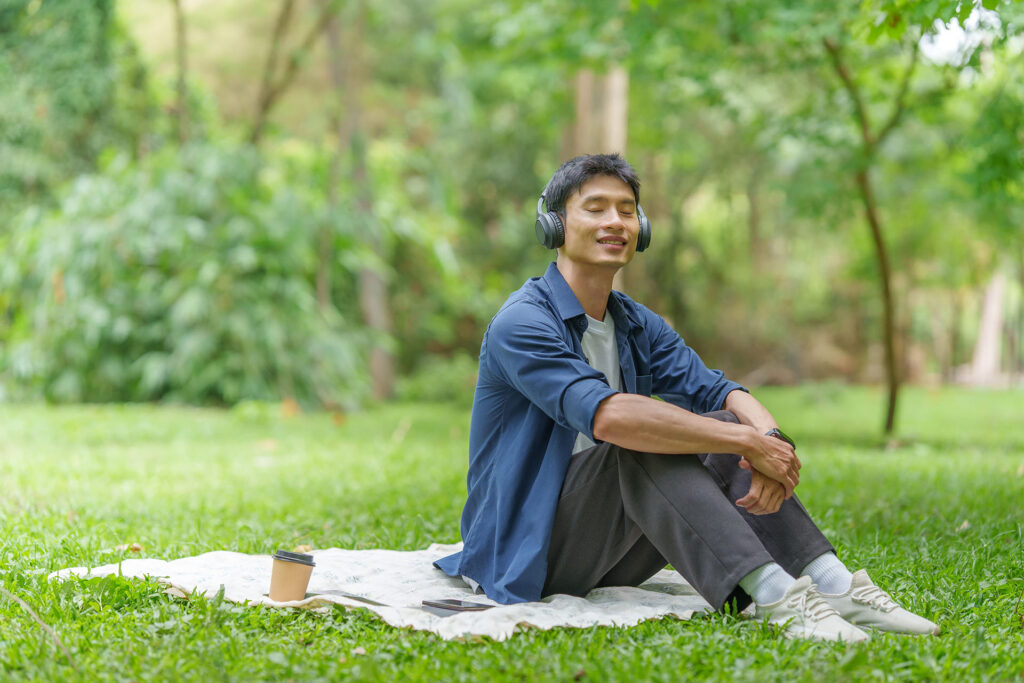
Did you find yourself outside in a t-shirt at the end of October, soaking up the sun, and then feeling something heavier underneath? On October 29, Toronto Pearson reached 22.2°C, breaking a daily record that had stood since 1946 (The Weather Network, 2026). Across Hamilton and southern Ontario, the days leading up to Halloween felt more like late summer than late fall, and November so far, is unseasonably warm.
It’s okay to enjoy a warm day. It’s also okay if that warmth leaves you uneasy. If you’ve noticed a flicker of worry, grief, or even guilt as the seasons shift, you are not alone, and nothing is wrong with you. What you may be feeling has a name: climate anxiety. At Ancestral Memory Therapy, Nikki Tollenaar (she/they), Registered Psychotherapist (Qualifying), supports people who are carrying it.
What Climate Anxiety Is (and Isn’t)
Climate anxiety describes the worry, fear, grief, anger, and helplessness that can rise up as we witness changes to the planet. It is not a diagnosis, and it is not a sign of weakness. Researchers increasingly describe it as a reasonable response to a real threat.
These feelings are common. In a global survey of 10,000 young people aged 16 to 25 across ten countries, Hickman and colleagues (2021) found that 59% were very or extremely worried about climate change, and more than 45% said those feelings affected their daily life and functioning.
Here in Canada, Lakehead University researchers Lindsay Galway and Ellen Field (2023) surveyed 1,000 young people. Seventy-eight percent said climate change affects their overall mental health, and 37% said their feelings negatively affect how they function day to day.
These studies focused on young people, but climate distress shows up at every age: in parents worried about their children’s futures, in elders watching familiar land change, and in all of us trying to get through the day.
Caring About the Planet Is Caring About Yourself
Here is something we want you to hear: your worry for the earth is an expression of love. You are part of the natural world, not separate from it. The air you breathe, the water you drink, and the seasons that shape your body’s rhythms are all part of your wellbeing.
Many ancestral and Indigenous traditions have always held this truth: the health of the land and the health of the people are woven together. When we tend to the earth, we tend to ourselves, our families, and the generations still to come. And when we tend gently to ourselves, we have more capacity to show up for the planet.
Climate Care Is Social Justice and Liberation Work
Climate change does not land on everyone equally. Dr. Ingrid Waldron, now a professor at McMaster University here in Hamilton, has documented environmental racism in Canada: how Black and Indigenous communities have been disproportionately exposed to pollution and environmental hazards, and how those harms compound existing social and economic inequities (Waldron, 2018). Her work also honours the long history of Black and Indigenous communities organizing to protect their people and their land.
Research also shows that climate distress is tied to how those in power respond. Hickman et al. (2021) found that young people’s distress was linked to the sense that governments were failing to act, and to feelings of betrayal. Galway and Field (2023) found the same sense of betrayal among young Canadians.
So if you feel angry, that anger makes sense. Caring about the planet means caring about the people most harmed when it is damaged. It is racial justice, economic justice, and justice for future generations. It is liberation work, and you don’t have to do it alone.
Finding Hope in Community
Even amid the heaviness, Galway and Field found that 71% of young Canadians surveyed still believed people can do something together about climate change. Galway has noted that collective action helps people process their emotions while also addressing the crisis itself (CBC News, 2023).
Some gentle places to begin:
- Name what you feel. Grief, fear, anger, and hope can all live side by side.
- Break the silence. Talking with friends, family, or a therapist lightens the load.
- Spend time on the land. Notice the trees, the water, the sky, and what they offer you.
- Find your people. Community gardens, local environmental groups, and mutual aid networks turn worry into connection.
- Rest. Burnout doesn’t serve you or the planet. Rest is part of sustainable action.
How Nikki Tollenaar Can Help
Nikki offers a warm, non-judgmental space where your feelings about the planet are taken seriously, never dismissed or pathologized. Together, you can explore how climate anxiety shows up in your body, untangle worry from helplessness, make room for grief, and reconnect with the values and ancestral wisdom that ground you.
The goal isn’t to make your care for the earth disappear. It’s to help you carry it in a way that is sustainable, so it fuels connection and meaningful action rather than overwhelm.
Ancestral Memory Therapy offers in-person sessions in Hamilton and virtual therapy across Ontario, with no waitlist. If the changing seasons are stirring something in you, book a session with Nikki Tollenaar. Your care for the planet matters, and so do you.
References
- CBC News. (2023, March 7). Is humanity doomed? Young Canadians share how climate change is affecting their outlook.
- Galway, L. P., & Field, E. (2023). Climate emotions and anxiety among young people in Canada: A national survey and call to action. The Journal of Climate Change and Health, 9, 100204.
- Hickman, C., Marks, E., Pihkala, P., Clayton, S., Lewandowski, R. E., Mayall, E. E., et al. (2021). Climate anxiety in children and young people and their beliefs about government responses to climate change: A global survey. The Lancet Planetary Health, 5(12).
- The Weather Network. (2026). Toronto smashes 80-year-old temperature record amid warm weather.
- Waldron, I. R. G. (2018). There’s Something in the Water: Environmental Racism in Indigenous and Black Communities. Fernwood Publishing.